
Volume 10, Number 6, September 2026
Dear Friend,
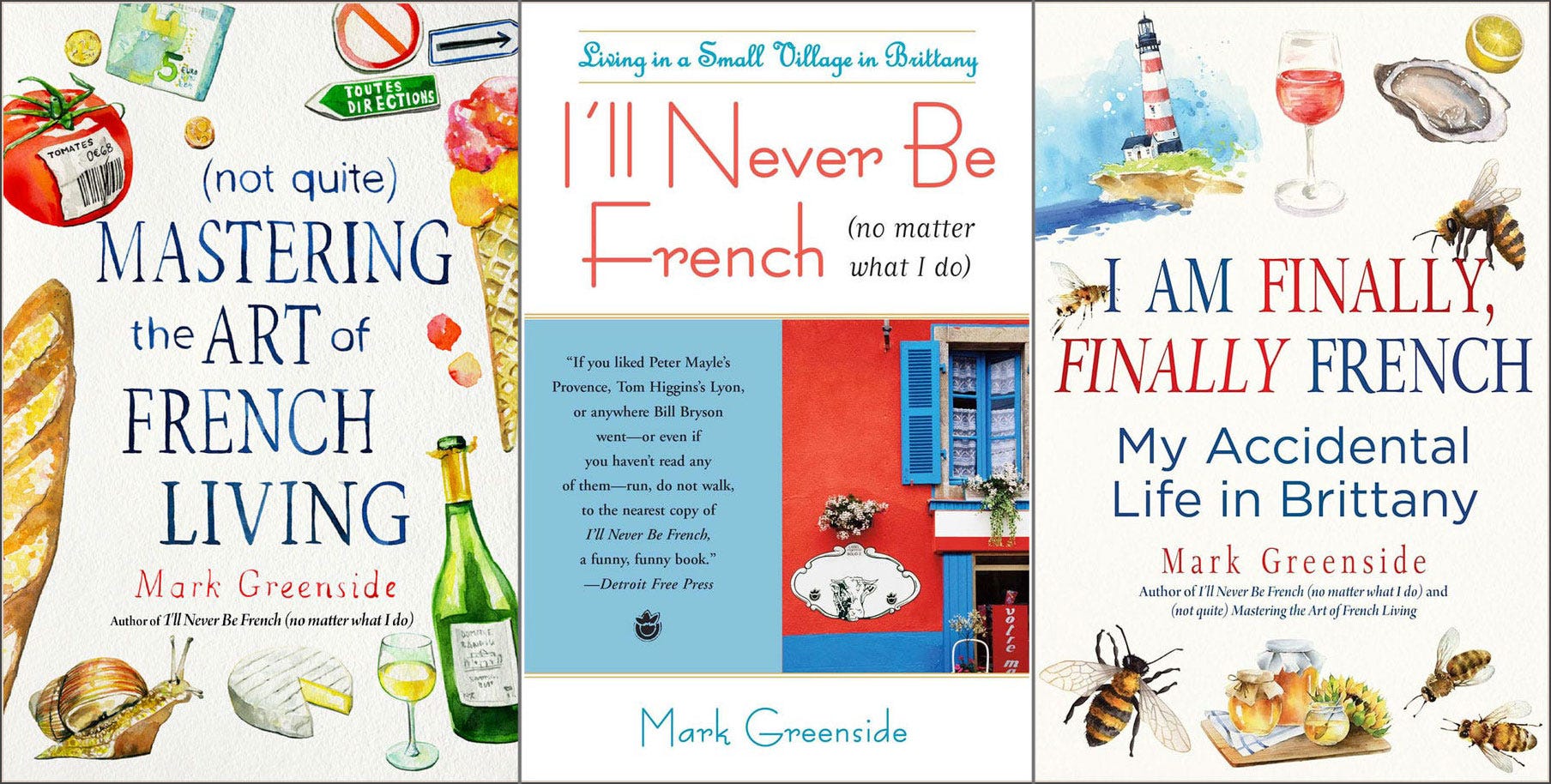
What a summer! I Am Finally, Finally French, My Accidental Life in Brittany was published in October 2025 and I have had at least one book event a month since then, capped by the book fairs in Nice (in May) and Budapest (in June), where Donna and I were treated like Jack and Jacqui in Paris. Budapest is, after all, the Paris of the east, and my father and his father and probably his father, too, were born there.
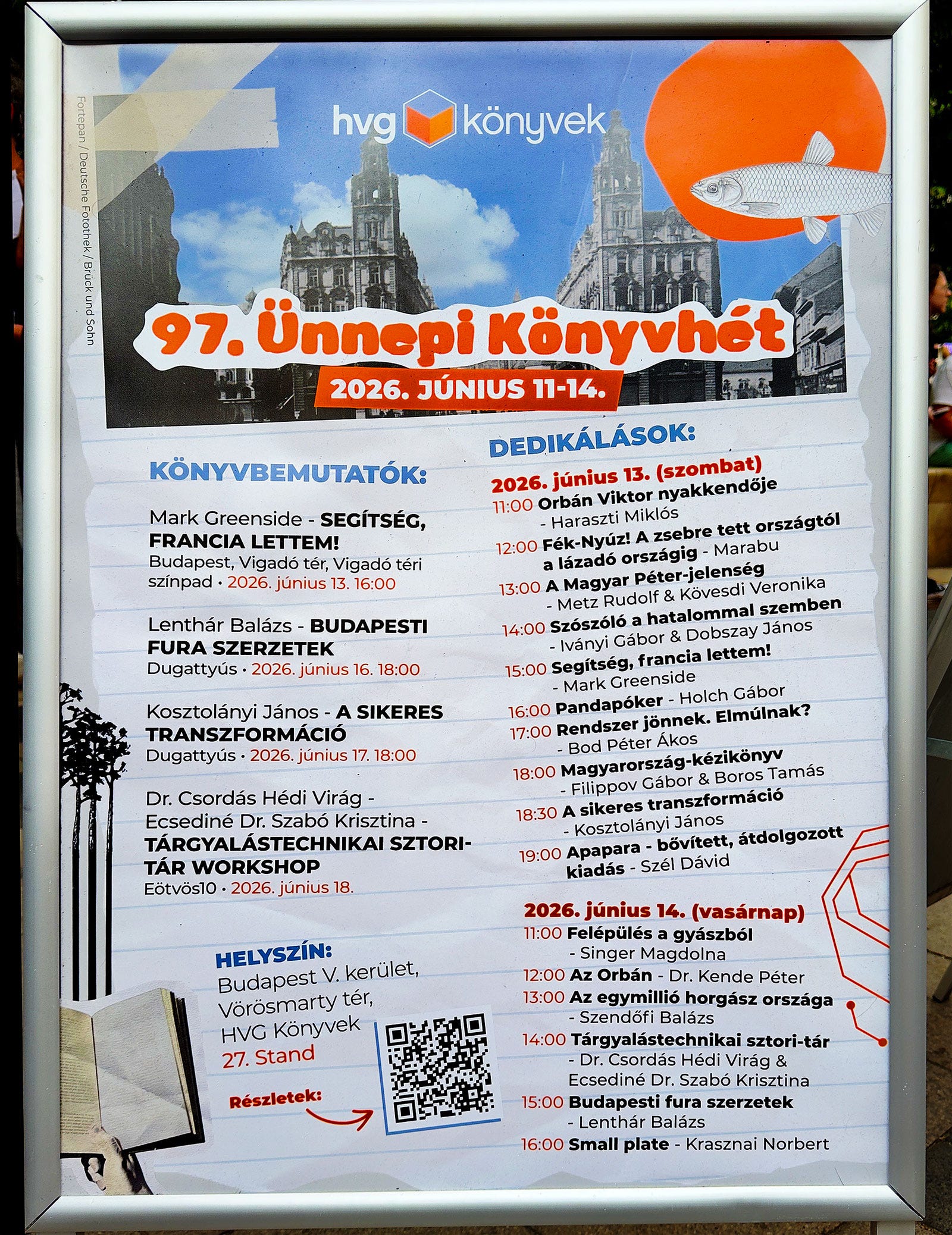
We were there during the first summer heat wave, and it didn’t matter. There was a book fair, and the people were coming out. Imagine Times Square, Broadway, and Fifth Avenue lined with book publishers’ stalls (instead of hot dog, pretzel, and nut stands), and thousands of purposeful people inundating the streets, sidewalks, bus lanes, and bike paths, not to protest this or that, but to look at books, wait in lines to meet authors, buy books, and listen to author interviews for three 90 degree days, 10 to 6.
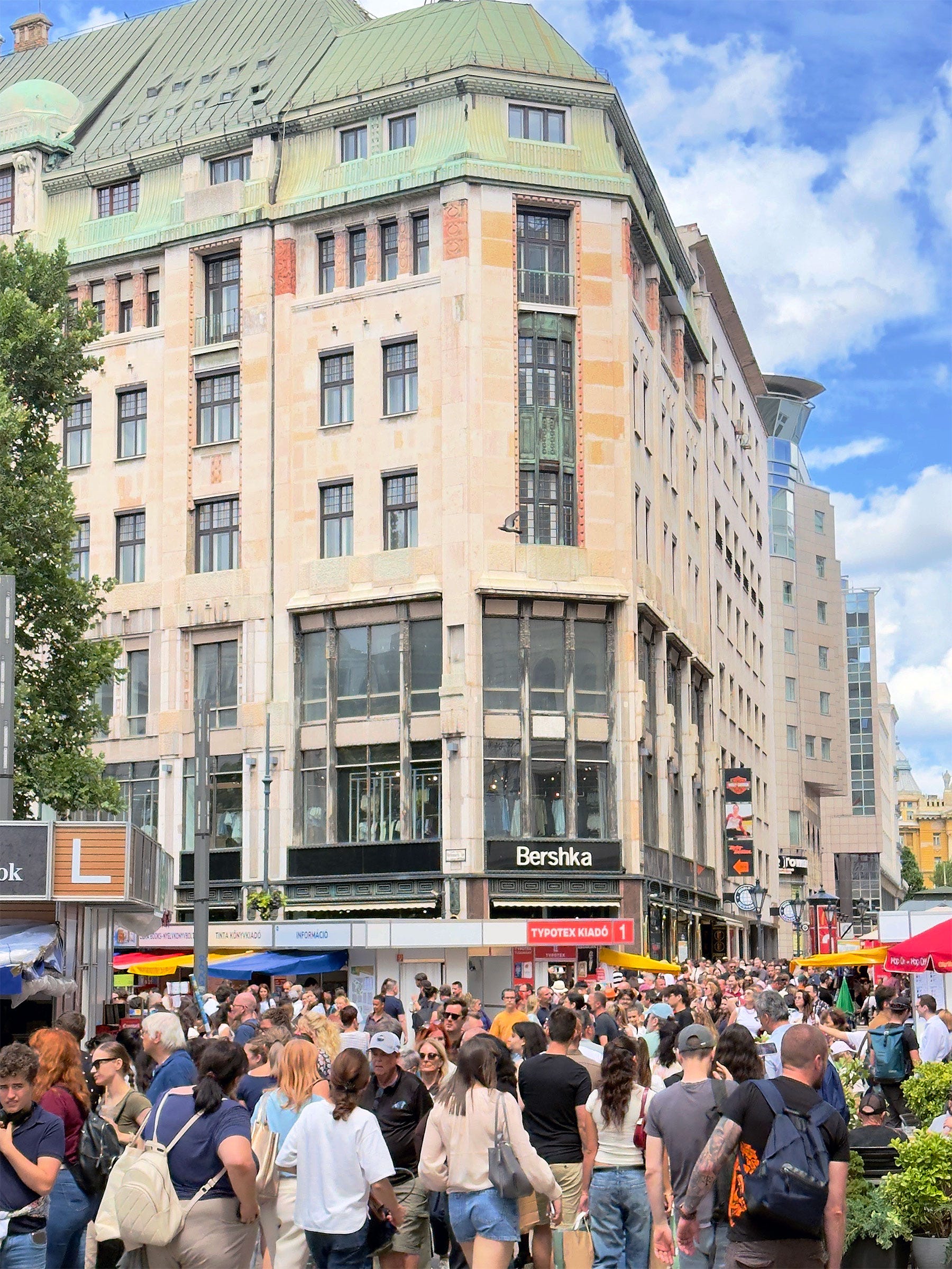
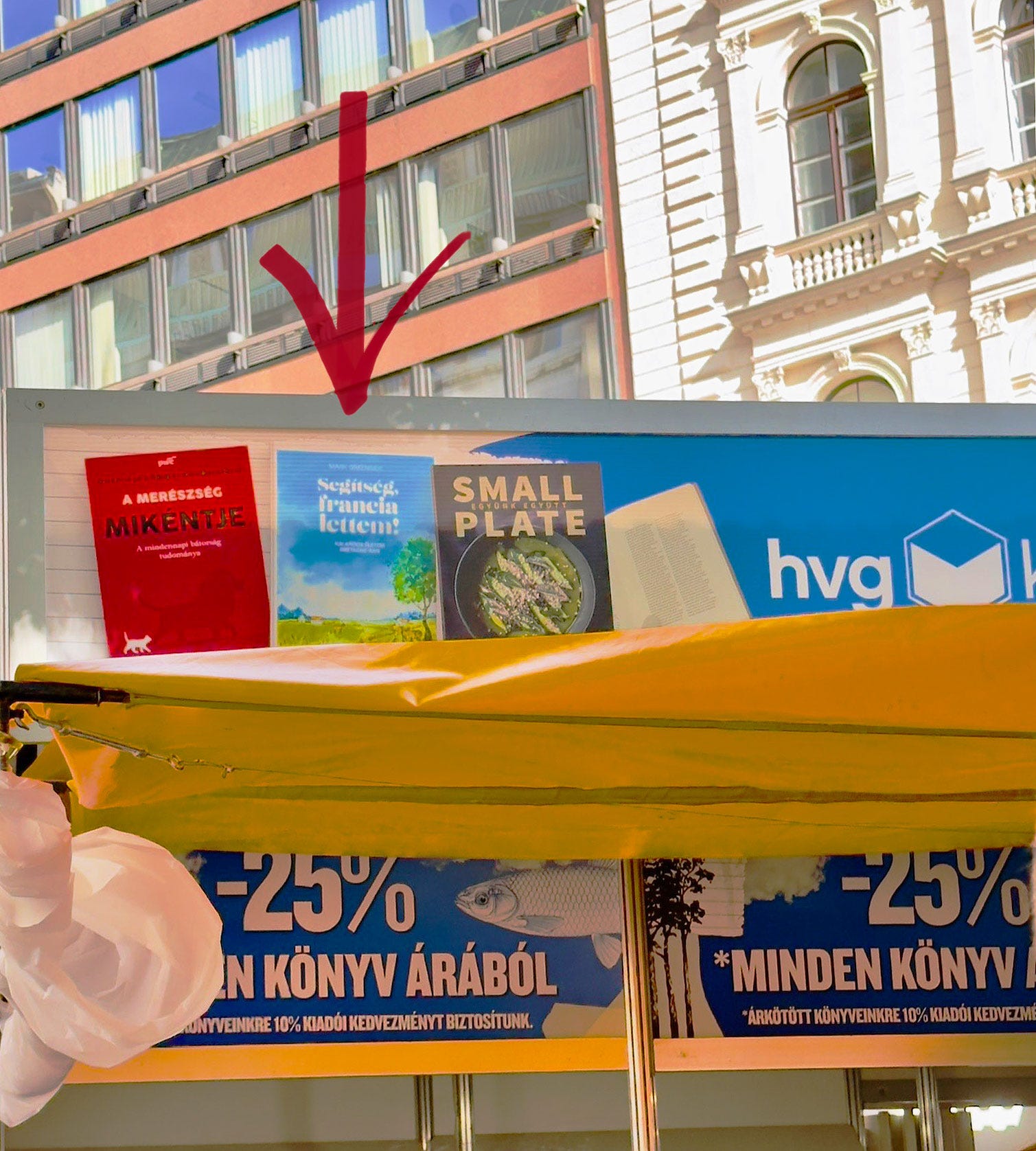
My publisher—HVG—had a stall in Vörösmarty Square, the heart of Budapest’s commercial district. The top of the stall featured a picture of my book with its Hungarian title—Help! I’m a Frenchman.
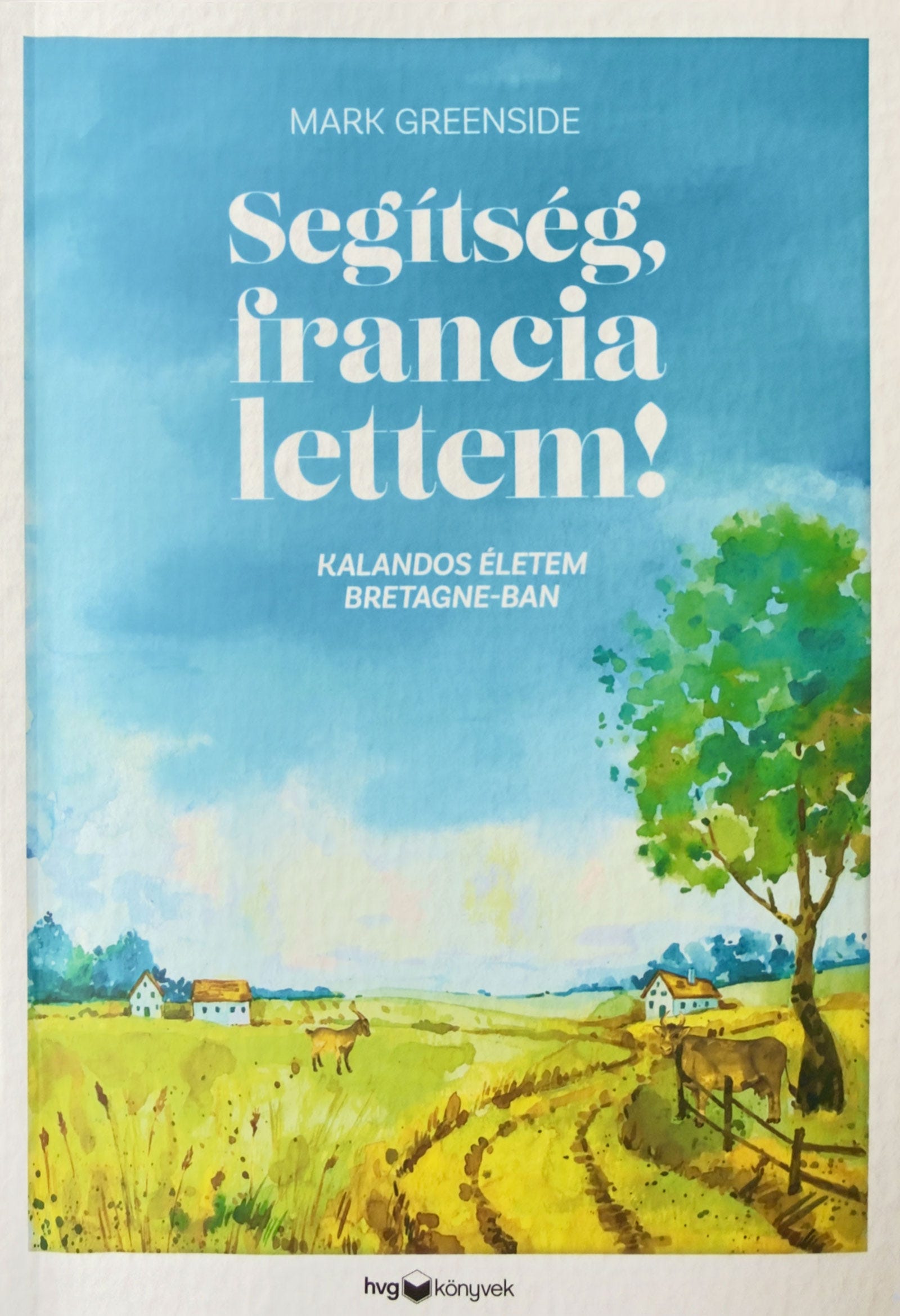
The publisher also reserved a table and scheduled me for book signings.
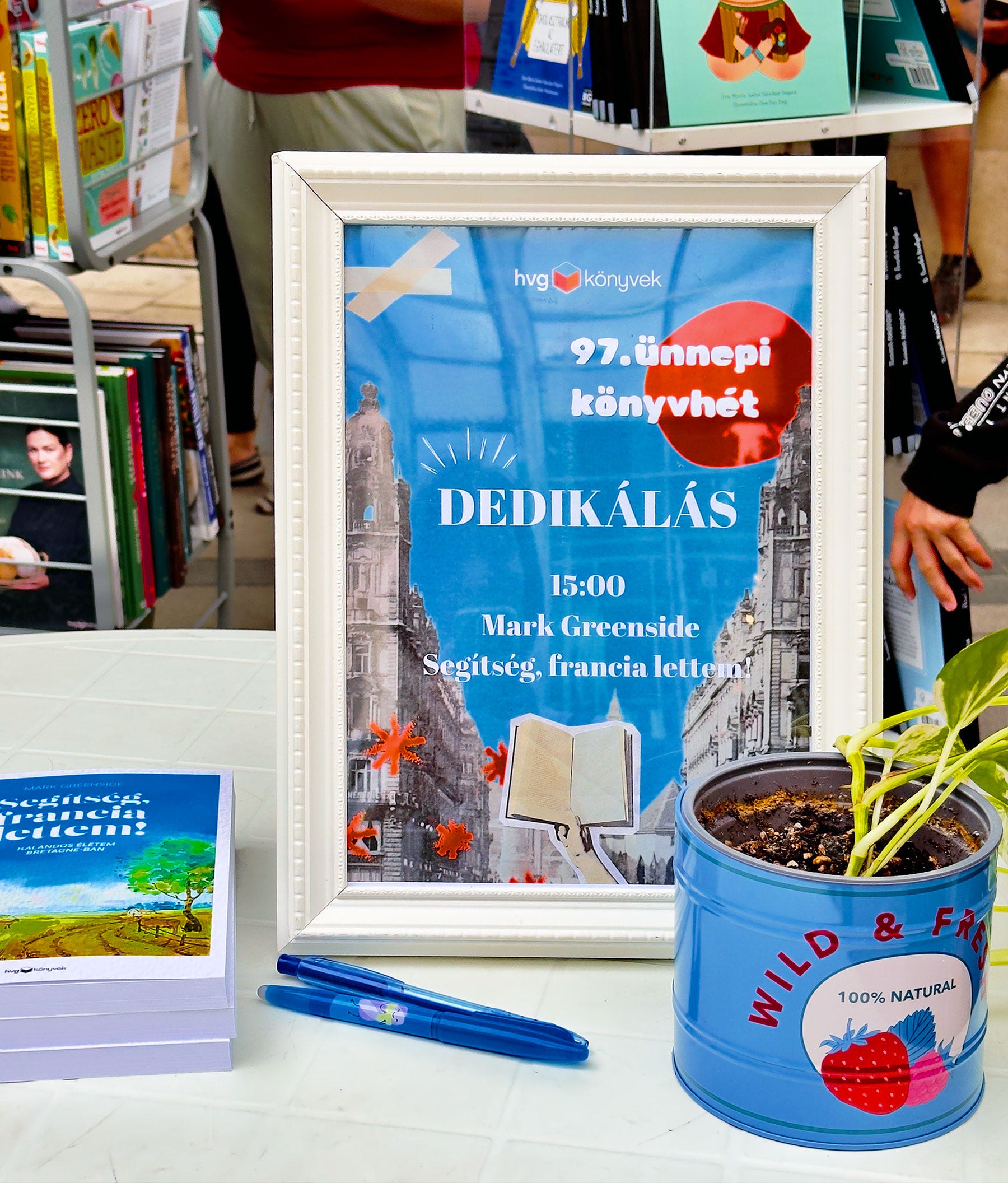
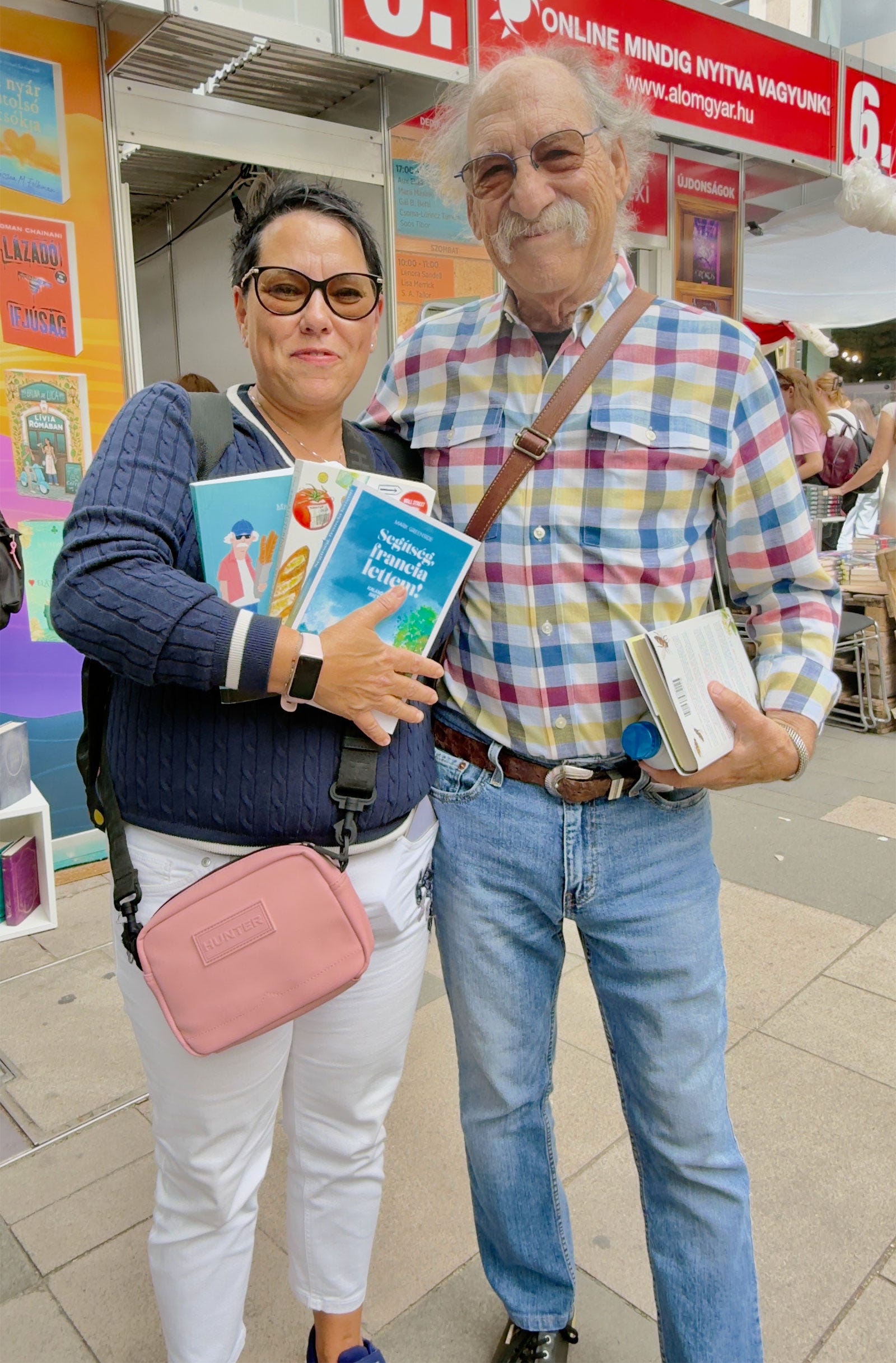
When I arrived at the table for the signing, a woman holding my three French books—one in English, two in Hungarian—was waiting for me with a smile and a hug.
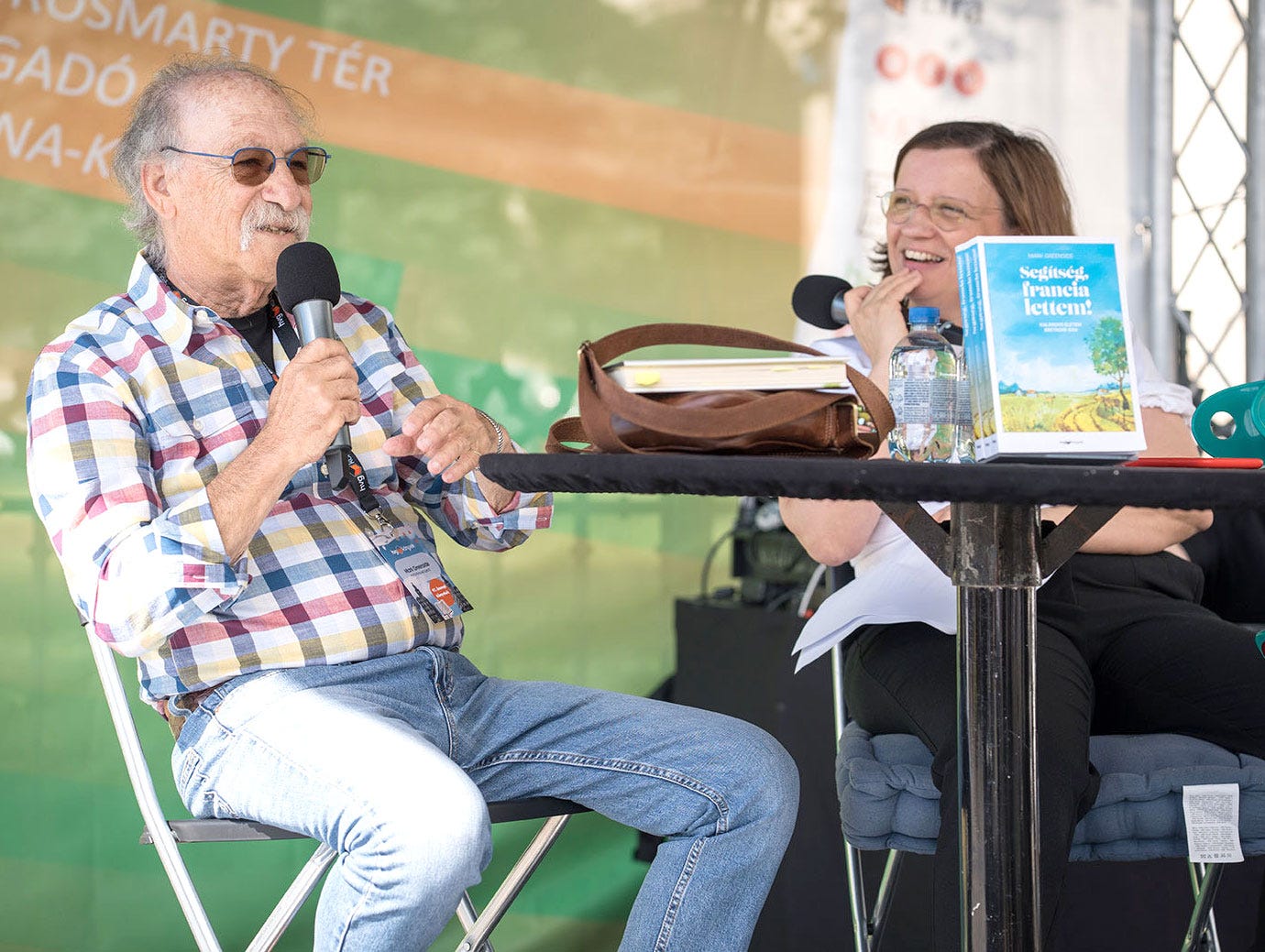
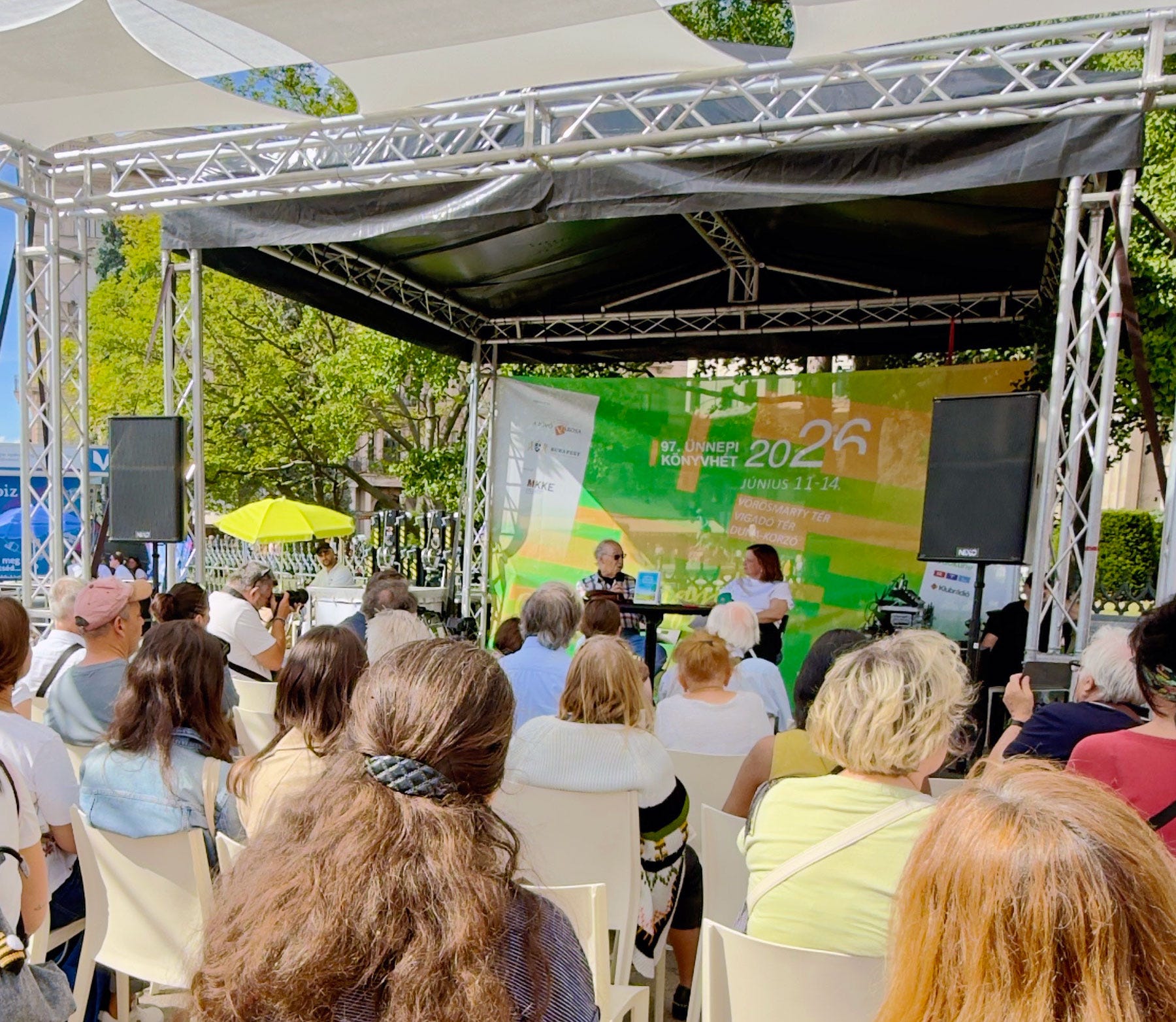
After an hour of signing, Donna and I were escorted to a smaller square with an outdoor stage and sound system where Panna Balàzsy, a Budapest TV personality and children’s book author, interviewed me, and a local reporter videotaped the interview, and said it would appear on Hungarian media.
Two days later, Donna and I flew to Paris and Brest and drove to Plobien, where our regular life—our French regular life—resumed….
It was mid-June, during the second heat wave, which the French call canicule, and I pronounce can-it-cool, when we landed. Thankfully, our house is 150 years-old with three-foot thick granite walls, and the rez de chaussée—the ground floor—is always cool and comfortable no matter the outside temperature. That’s the good news. The bad news is sometimes we have to go to the third-floor attic, which is unbearable, or worse, go outside, like to the bank, which among its many other eccentricities is not air-conditioned.
I go the day after we arrive in Plobien to withdraw money to pay the people who have worked on the house for the past nine months. It’s 94 degrees outside. I walk in, and it’s 94+, which is probably why there’s no one there except me and the teller, a young woman in a tank top, streaked red hair, and lip, nose, ears, eyebrows, and who-knows-where-else, piercings.
“Bon-jour,” I sing, trying not to gawk, still not comfortable with this new world normal, and hand her my checkbook.
“Bonjour,” she replies, professionally, and takes it.
“Je voudrais mille cinq cents euros demain, s’il vous plait.” I’d like 1500 euros tomorrow, please. I really want the euros today, but 35 years of banking here have taught me today, like quick, now, and dinner at eight sharp do not exist, and tomorrow is as good as I’ll get.
She enters the account number into her computer to verify I have 1500 euros in my account. When she’s satisfied I do, she hands me a form to sign, and I do, even though I can’t read it. I hand it back to her, saying, “Demain matin, si’l vous plait.” Tomorrow morning, please.
She taps something into the computer, and says, “Il sera là le vingt-cinq.” It will be there the 25th.
“Le vingt-cinq! C’est neuf jours!” It’s nine days!!
“Oui. Apres midi.” After lunch.
‘’Normalment c’est un jour. C’est nouveau?” Normally it’s one day. Is this new?
“Oui. Pour sécurité.” As soon as she says it, I remember my friend MF (in the March 2026 Newsletter at markgreenside.com) when the banker told her she’d have to wait a month to get money out of her account to buy a van. When I first read it, I was (1) outraged, and (2) relieved. I thought it happened to her because she’s a woman, so it would never happen to me…. Now I see France is more egalitarian than I knew....
I’m not ready to quit, but I don’t know what else to do, so I stay there, muttering bad things about the bank, the village, France, the heat, no air conditioning, when, like “Bingo” or “Eureka,” she blurts, “Avez vous la carte?”
“Quelle carte?”
“La banc carte.”
“Oui,” I say, surprised, and take out my wallet…. Years ago, I got the card so I could buy gas on Sundays because my U.S. cards wouldn’t work. It wasn’t a problem during the week because someone was in the pay booth to swipe my card through the machine that read it and billed me, but Sunday is family day in France, and the pay booth is closed. On Sundays, the gas stations are fully automated, self-serve, and require a credit or debit card with a chip and a four-digit code, which French cards had at the time, and U.S. cards did not….
“C’est la!” I say, holding up my debit Mastercard.
“Bon,” the girl says, and adds a lot of other words I don’t understand. I know she asked me a question, but I don’t know what it is, so I stand there, mute.
The girl (21), seeing old guy’s (82) helplessness, probably thinking hopelessness, gently takes the card from my hand, taps something into the computer, and hands me the Mastercard along with a green plastic card, and says another long something I don’t understand.
I stand there, muter, with two cards, no money, and no idea what to do. My hopelessness confirmed, the girl takes the cards from my hand, walks around the counter, and goes to the ATM in the lobby. I follow and watch as she slides my card into the mouth of the machine and taps 1-1-5-0. “Le maximum,” she says, and in a tone telling me she doesn’t expect me to know, asks, “Votre code?”
To her surprise and probably relief, I enter my code, and 1150 euros burp out—at least I hope it’s 1150 euros—and she hands them to me. Then she puts the green card in the machine, taps 3-5-0, and there it is (I hope): 1500 euros on the same day, not nine days later or even one day, but now, today, fifteen minutes later, and I remember AH’s experience at the post office (in my February 2026 newsletter) and how he finally got his package, and once again I see how France makes the most basic tasks impossible and inconvenient and then provides the most ingenious solutions. No wonder French people are so good with philosophy and logic: philosophy to explain the reasoning and principles behind the obstacles and inconveniences, and logic to overcome them.
Unfortunately, though (for the bank and hopefully not me), this is not the end of this summer’s banking experiences, but the beginning….
Seven months earlier, I lost all contact with the bank, though they didn’t lose contact with me. I received their information about increased fees, fewer privacy rights, insurance and investment possibilities, which I didn’t care about, but not my monthly statements, which I did. The same thing happened with my bank in the U.S. when it eliminated paper and went digital, so I did what I did with my U.S. bank: I went online to check the box to resume getting paper statements. I entered my username, password, and security code and my second most dreaded message appeared on the screen: ‘Incorrect username or password’.
Squeamishly—carefully—I reentered the username and password I knew were correct and proved to me, but not the computer, that I’m not a robot, and my first worst dreaded message appeared—‘suspicious activity’—and cut me off and threw me out. Now, with no monthly statement or digital access and lots of automatic deductions—for electricity, phone, garbage, water, internet, taxes, and insurance—I have zero idea of my continuing diminishing balance. In the U.S., if I overdraft, it isn’t a problem. I plead guilty, pay a usurious fine, and my relationship with the bank continues. Not in France. In France, if I overdraft, it’s a divorce: the bank trusted me, took care of me, protected me, did everything I asked, and I cheated….
On the bottom of the page telling me I’m barred is a customer service email address. In the U.S., I see this address or phone number and I quit: they rarely answer or respond, and if they do, they provide no service—at least none that I want. Often, they offer a list of preset questions to assist me, but they rarely have the question I have, and there’s usually no place for me to ask. But this is France, I remind myself, the land of impossible obstacles and ingenious solutions, so with conflicting feelings and expectations I tap on the link to customer service and write, “I cannot open my account. It has been blocked. Please, fix this problem for me as I need to know what the balance is in my account.”
I send it and receive an immediate automatic reply telling me my message has been received, and I’ll hear from them within 48 hours. Right! Yeah, sure… Ha!
The next day someone named Elodie responds. “The easiest solution would be to schedule a phone call or video meeting so that we can discuss this together.”
The English is perfect and the message is so agreeable, I think she must be AI, but several days later, at the agreed upon hour, the phone rings, and she says, “Hello, Mister Greenside, this is Elodie. How may I help you?” and I’m charmed.
I ask her where she is (Brest), and she asks me where I am (San Francisco Bay Area), and we talk about the weather in both places until we’re comfortable enough with each other to do business, and she asks, “How may I help you?” and I tell her, “I lost access to my online account last December, and I haven’t received a statement in the mail for months.”
With no hesitation, like she says it a lot, she says, “The best thing would be for you to reregister with a new username, password, and security code,” and she walks me through how to do it on my computer—again and again and again, but I can’t get in. As a last resort, she sets up a dummy account, which under the circumstances seems right, and I enter the phony names and numbers, and I’m cut off, thrown out, and barred. As consolation, she sends me my last four monthly statements—and she makes an appointment to get me back online with a Monsieur D at my local bank in Loscoat, which is why three days after my 1500-euro experience Donna and I are back at the bank.
A different woman with tattoos is behind the counter. “Bonjour,” I say. “Nous sommes avez un rendez-vous avec Monsieur D.” We have an appointment with Mister D.
She checks her computer, verifies the appointment, and sends us to wait upstairs where it is five degrees hotter than the 94+ on the ground floor. A few minutes later, a young man, looking very sportif and confident, wearing a long-sleeve white shirt that is perfectly pressed and pristine—like he’s been waiting for us in a freezer—emerges, and says, “Bonjour.” He shakes Donna’s hand, then my hand, and invites us into an office that’s as hot as a sauna and closes the door for privacy, which apparently he—and most of France—care about more than breathing. Donna opens the door, and we begin.
“Parlez-vous anglais?” I ask.
‘’Un peu,’’ he says, A little, which means his English is better than my French. I tell him what I told Elodie.
‘’Last December, I lost all access to my online account, and I haven’t received a statement by mail in months. It’s impossible for me to know what is in my account.”
He taps on his keyboard, and reads, “The bank needs proof you live in California for us to mail your statements.”
I take out my wallet and show him my driver’s license with my picture and California address. He shakes his head, No. I hand him my passport with my picture and the same California address, and he says, “No.” Logic, I think, that’s what’s needed here—and because it feels more legitimate and persuasive, I say it in French. “Le bank envoyer moi le statement à la même address chaque mois pour vingt ans!” The bank sends me the statement to the same address every month for twenty years.” I say it like, ‘So there!’
“Oui,” he says, and explains, “The bank needs to see a recent bill, like an electric bill, with your name and address on it to prove you still live there,” which is a new problem: none of the bills are in my name. It’s Donna’s house—the house she bought before we married, and everything is in her name.
“C’est un problème,” I tell him, and explain the situation, and he says, “It’s OK. The bill can be in Donna’s name because both of you are on the account,” and the problem is solved.
“Et moi internet access?” I ask. And my internet access?
“What browser do you use?”
“Chrome.”
“Ah,” he says, that could be the problem, which means his and the bank’s problem is bigger than mine, as 70% of the world and 60% of France uses Chrome. “It could also be sécurité or an upgrade,” and then, like Elodie, he says, “You need to reregister with a new username, password, and sécurité code. Donna should, too, with her own username, password, and sécurité code.” So we do….
Using his computer, we enter all the information, and whammo, bingo, eureka and voila, it works. We leave the bank with both of us able to access the account on our phones and laptops—until later that evening Donna tries to get in, and is cut off, thrown out, and barred. That was Friday.
Saturday morning, we’re back at the bank. I can access the account on my phone. Donna is totally blocked. Monsieur D is either too smart or busy to see us. A woman in her 30s comes out of a ground floor office, says, “Bonjour,” shakes Donna’s hand, my hand, and invites us into her office.
‘’Parlez-vous anglais?’’ I ask.
‘’Non.’’
‘’Bon,’’ I say, Good, though it’s not, and I explain, “Hier nous sommes ici pour le problème avec le internet et Monsieur D fait le reparation et tout marche bien. Hier soir, marche pas pour Donna. “Yesterday we were here for the problem with the internet and Mr. D did the repair and everything works well. Last night, doesn’t work for Donna.”
“Vous devez vous réinscrire avec un nouveau nom d’utilisateur, un nouveau mot de passe et un nouveau code de sécurité.” It sounds better in French, but it means the same: you must reregister with a new username, a new password, and a new security code.
For some reason, she’s saying this to me, though my username, password, and security code work fine. I figure she’s French and will have her reasons, so I enter my username, password, and security code into her computer, and I’m immediately cut off, thrown out, and barred.
“Nous essayons le téléphone de Donna,” she says, like don’t worry, I know what I’m doing, no problem, and rest assured. Donna, looking not so sure, enters her username, but before she can enter her password the woman yells, “Stop! Il y a un bug dans le système.” There’s a bug in the system. “Nous devons tout arrêter.” We must stop everything, which brings us back to where we were a week ago with no online access to the account, no statement coming in the mail, and no idea of my daily diminishing balance, which is why on Tuesday—the bank is closed Sunday and Monday—we’re back at the bank for a rendezvous with Monsieur D. I’ve now been to this bank more in a week than to my bank in California in a year.
Last time, he told us he’s going on vacation soon, so this may be our last chance to fix things. I hand him a copy of the Pacific Gas and Electric bill Donna found online and printed out, and ask, “C’est bon pour envoyer le statement à Californie?” Is this good for sending the statement to California?
“Normalement,” he says, which isn’t reassuring, but I know it’s out of his hands, so I ask him about my online access, which is in his hands. I tell him all that has transpired since Friday and how “neither of us has access to the account.”
He recommends we reregister with a new username, password, and six-digit security code, which I do on his computer, and amazingly, I’m in. Donna does the same, and he tells her she also needs a four-digit security verification code to verify the six-digit security code, username, and password. She enters one, and she’s in.
“Je n’ai pas le quatre digit code. Seulement le six. C’est nécessaire le quatre?” I don’t have the four-digit code, only the 6. It’s necessary the four ?
“Oui. Absolutely.”
I reregister using my latest username, password, six-digit security code and new four-digit security verification code, and I’m cut off, thrown out, and barred, which doesn’t seem to surprise or perturb him at all. He says, “Wait 24 hours and do it again, and you’ll get in.”
I doubt it, but to be sure, I wait 48 hours, enter everything, and, yes, indeed, I’m in. Donna is, too. Now, when we return to California, we’ll see if the monthly statements are there. If not, I’ll write Elodie, and we’ll start all over again. I’m already looking forward to hearing her mellifluous voice say, “Hello Mr. Greenside, this is Elodie, how may I help you?”
Meanwhile, did you know Microsoft licensing is different in each country, and if you buy your computer in the U.S. (as I did) and your license expires while you’re in France (as mine did), you cannot renew your U.S. license from France, which is why I had no access to Word or my World files this summer, and why you’re receiving this June-July newsletter in September….
Something I came across that you might find useful: LanguageMate.
It is run by Céline Guerreiro from France. She is careful to say that she is not a French teacher, and that this is not a language school.
She pairs an English speaker who already gets by in French with a French native speaker who is at the same stage in English, then coaches both of them on how to learn from each other, so that the progress comes out of a real friendship rather than out of a classroom.
Her slogan is “Learn French through a real friendship.” You can find her at celine-guerreiro.com
Check it out.
If you received this message directly from me, you’re already signed up to my Substack. If someone forwarded it to you or you’re not sure, sign up below:
More content, including previous newsletters, is available:
Website: www.markgreenside.com
Amazon author page: amazon.com/author/markgreenside
Facebook author page: www.facebook.com/mark.greenside
You can purchase I’m Finally, Finally French is at any brick-and-mortar bookstore, or click on any of the following retailers below. The Hungarian language version is available here.


Thanks so much, Harriet. My bank, like Leclerc and my car, is an ever ending sources of humiliation and difficulty, which provide plenty of material to write about. Budapest was amazing. It's a very literate society and almost everyone speaks English, because almost no one speaks Hungarian.
Laugh out loud funny as usual. And loved seeing your book in Hungarian!